
Picture this. You’ve only just taken your latest spring knitting project off the blocking mat (mine was a Champagne Cardigan by PetiteKnit), and you’ve obvs been wearing it every second of every day because you love it so much. But now it’s gone a bit, well… fuzzy.
Little bobbles have started popping up under the arms and along the sides, but why?! Is it something you did wrong? Is the wool poor quality?
Not at all.
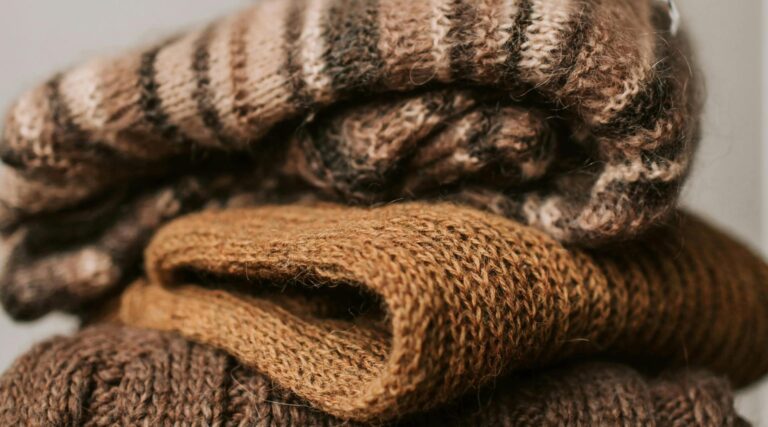
In fact, pilling on your hand-knitted garments (the name for those pesky little bobbles) are completely normal, and often just a sign that the yarn you chose to knit your cardigan/sweater/mittens with is buttery soft and super snuggly, exactly what you want next to your skin – unless, of course, you’re one of those die-hard wool fans who can wear an Icelandic sweater without shuddering. If you’re one of those knitters, I salute you.
So if it’s not something you did wrong, and it’s not bad yarn, what is pilling, what causes it on our handknit items and what the fluff can we do about it?
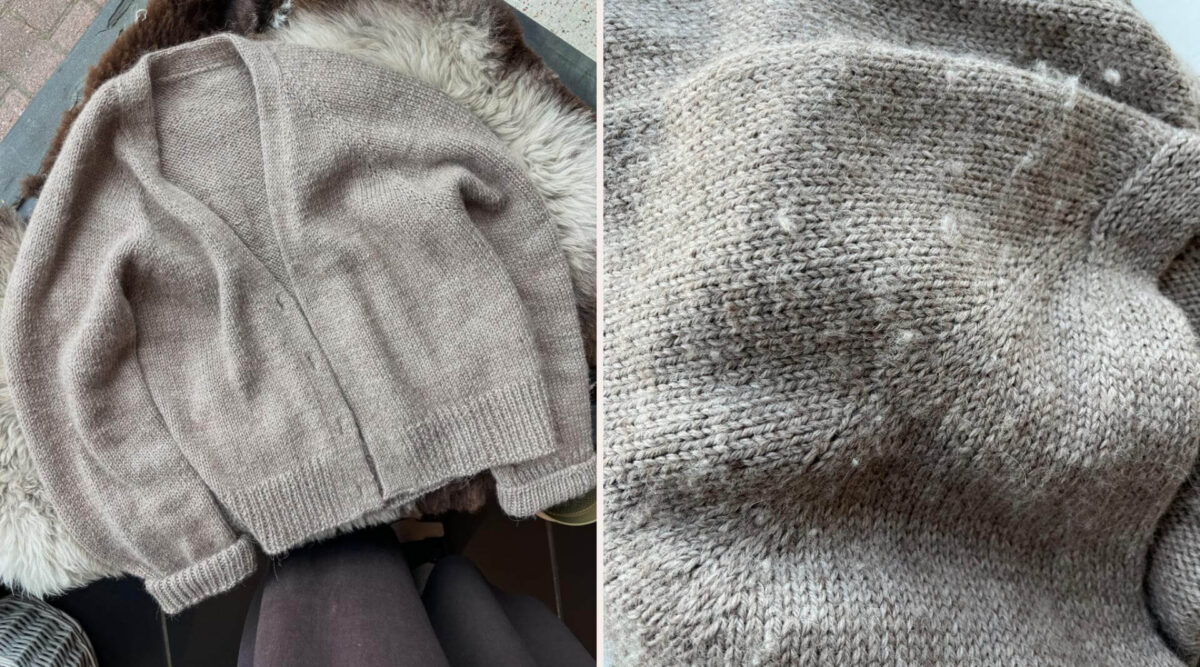
Pilling happens when teeny bits of loose fibre slip free from the yarn twist and start to rub together. They clump and tangle together through friction to create a little ball of fibre, or in other words, a pill.
Pills tend to show up in areas of high friction – places that get a lot of wear and movement, like your underarms or the side of your jumper where your bag sits.
Nope! Not. At. All. It’s a common misconception that wool that pills must be ‘bad’.
See, pilling actually happens most often with higher quality, fancy fibres like cashmere, merino, and other soft wools. Why? It’s partly down to the fibre staple length – that is the length of the individual wool strands that are spun together to make the yarn.
In these soft and oh-so luxurious yarns, the fibres tend to be short and smooth and silky. Ideal for the cosiest handknit cardigan of dreams, but because the fibres are shorter, they can escape from the twist more easily, making them more prone to pilling.
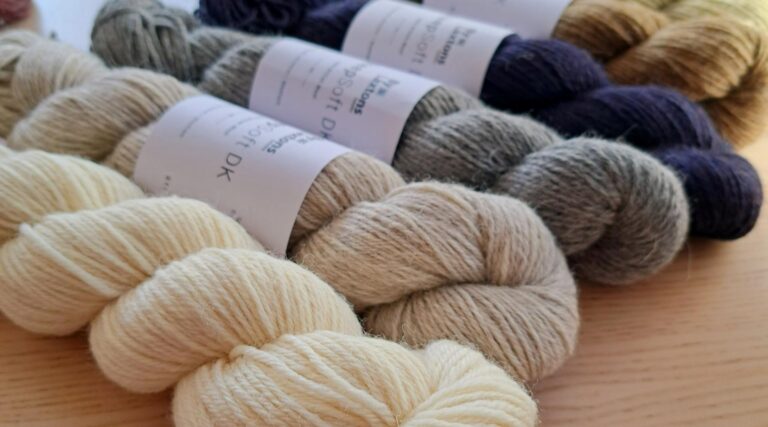
Then you have those hardier, rugged yarns such as Icelandic wool or traditional Shetland yarns (like Baa! fave Jamieson’s of Shetland Spindrift). These have longer fibre staples which stay locked into the twist, making the yarn more stable and far less likely to pill – part of the reason why your granddad’s ‘scratchy’ woollen jumper is still going strong 50 years later.
Pilling is a natural process, so if your handknit is on the softer side, a few (or even a lot of) bobbles are pretty inevitable. But! If you aren’t quite ready to resign yourself to a life of knitwear admin, there are a few things you can do to help reduce pilling in your knitting projects in the first place.
With a little TLC and some regular upkeep with a wool comb or a de-fuzzer, you can lift those little balls and tidy up the fuzz, leaving your handknit looking as fresh as the day it came off the blocking mats. I like to think of it a bit like brushing your hair – probably best done every now and then to keep things looking neat and tidy(!) And, it does make a big difference – see?
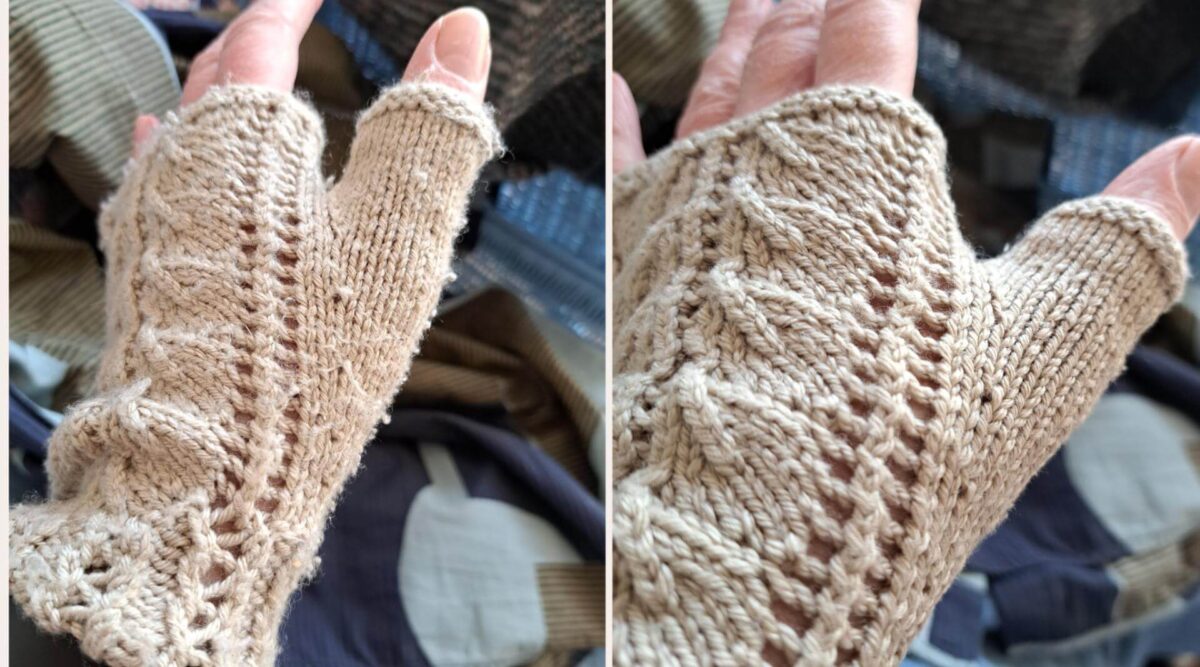
A wool comb is a super easy and affordable solution (second only to the classic debobbling method of picking them off by hand while you’re waiting for the bus/dentist appointment/dog to do his business). That said, picking your pills off your knits by hand can actually loosen the fibres and create more fuzz, thus perpetuating the pilling cycle so not a method I fully recommend. But hey, I’m guilty as charged!
Anyway, a wool comb is a handy little tool you can keep in your project bag or notions pouch to gently remove a pills or fuzz from your hand-knits. It usually has a flat head with metal teeth or a rough, grated edge that gently lifts and collects pills as you brush it over your knit. All it needs is a bit of light pressure and you can spruce up your handknit garment quite easily without damaging the knitted fabric.
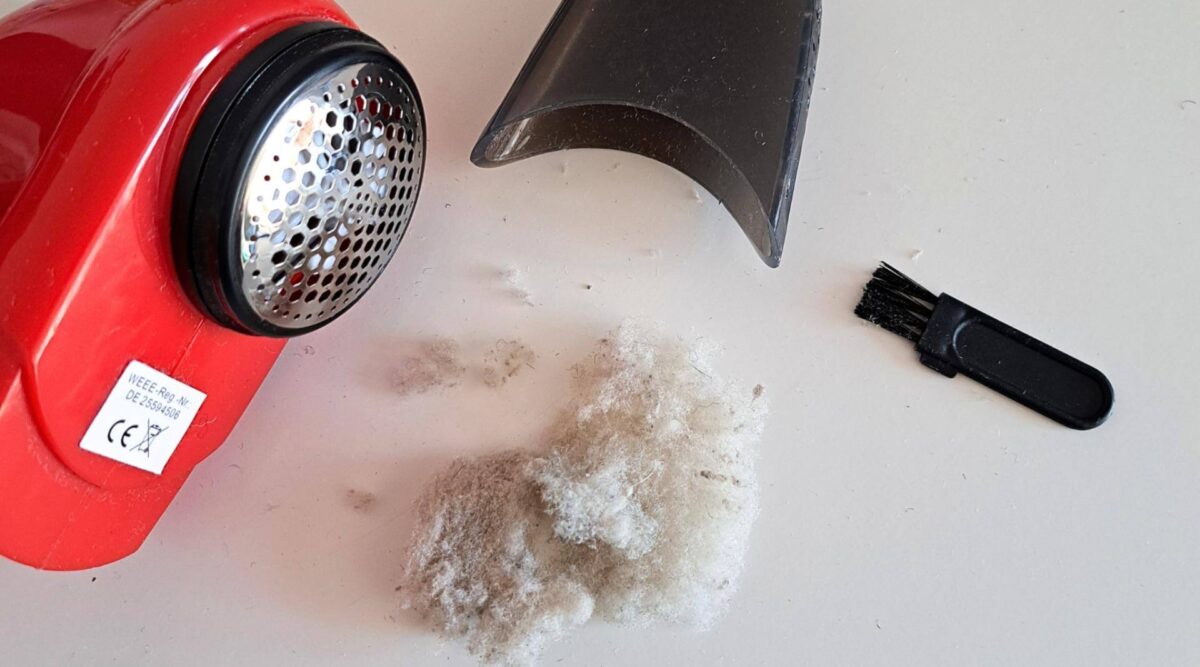
My favourite pilling solution, though, is a defuzzer (AKA a fabric shaver or lint remover). These babies remind me of those handheld fans you see people using in the height of summer to keep cool. It has a rotating blade behind a sort of holely guard that safely shaves away pills and fuzz from your knitwear. It also collects all the little bobbles and fuzz in a container which you can then pop in the bin when you’re done – or if you’re like us, marvel at how much fluff you managed to collect, like this lot from just a single pair of mittens…!
Pilling (and depilling) might be a bit of a faff, but it’s totally normal when it comes to knitwear, especially when you’re knitting with those high-quality yarns and super soft fibres. And with a little care, it is pretty easy to keep your hand-knits looking fab all year round.
But honestly, if you’re anything like me and a bit on the lazy side, a few bobbles here and there are not the end of the world. Just like I don’t always brush my hair (I’m a curly girl, okay, I’ll end up looking like Monica from Friends, okayyy), I don’t always keep on top of my knitwear care.
And with that being said, I’m about to head out wearing my Champagne Cardigan, pills and all. (Don’t judge me, please…)

To provide the best experience we use cookies to store and/or access information. Consenting will allow us to process data on this site. Not consenting may adversely affect certain features and functions.