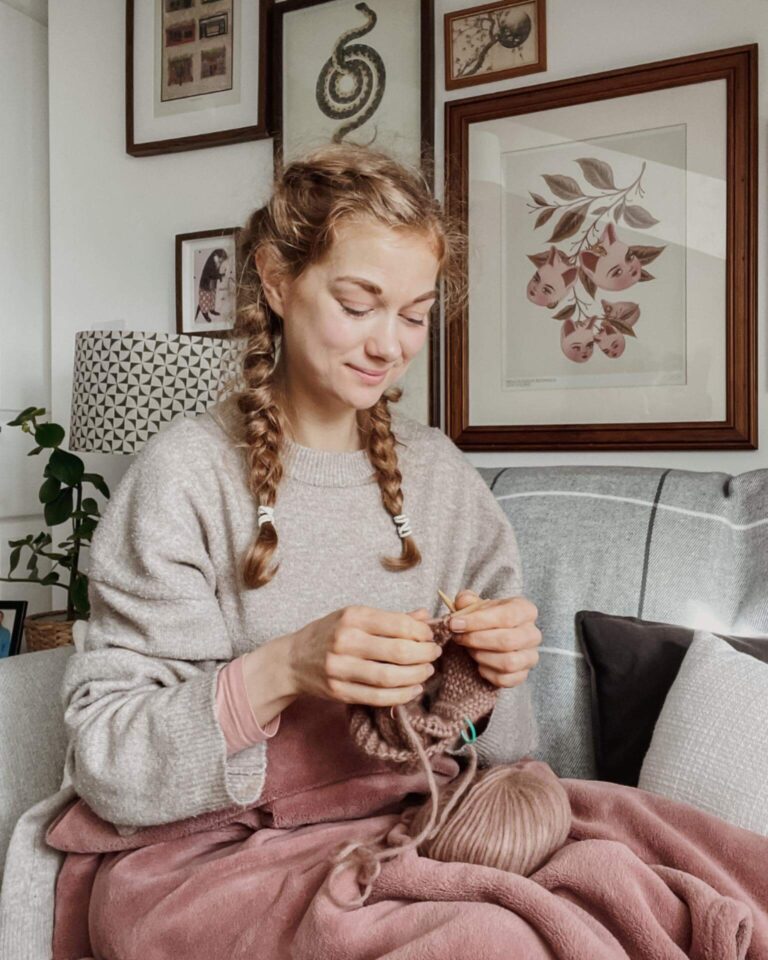

I used to be a vegan knitter.
In fact, I once ran a vegan knitting business making super chunky knitting kits using vegan-friendly yarn, so I know first hand that if you’re a vegan knitter or crocheter, choosing a yarn for your craft projects can feel surprisingly complicated.
Walk into many yarn shops, like us (that’s Baa! in Stonehaven, Scotland), and you’ll be surrounded by all sorts of alpaca, mohair, silk, and wool yarn. Which is lovely, but not especially helpful if you’re trying to avoid animal fibres.
I know I found it overwhelming, and to be honest, I didn’t really know what my options were when it came to vegan yarns. At the time, I defaulted to acrylic because it wasn’t an animal fibre, but, if I’m honest, it never fully sat right with me. I didn’t love the idea of putting more plastic into the world (it was actually one of the reasons I ended up stepping away from running my vegan knitting business) – and from a purely knitter’s pov, acrylic was, in my humble opinion, utter pants for the garments I wanted to knit.
Now, please don’t take that the wrong way. Acrylic absolutely has its place, and I’ll come to that in a bit, but after a bad experience knitting up a Novice Cardigan Chunky Edition by PetiteKnit, in Stylecraft Special Chunky I was pretty damn close to the end of my (not so) woolly tether.
I remember thinking: there must be a better way to be a vegan knitter.
And if you’ve ever thought the same or been in a similar position where you want to avoid animal fibres, but are unsure what vegan friendly yarns are available to you, I hope you might find this useful.
Put simply, vegan yarn, or vegan-friendly yarn, is yarn made without animal fibres.
That means no wool, alpaca, mohair, silk, or cashmere. Instead, vegan yarns are made from plant fibres, synthetic fibres, or, and this depends on your viewpoint, recycled materials.
(There’s a fair bit of nuance in this subject. I’m sorry in advance.)
These yarns can do a cracking job for both knitting and crochet projects, but they do all behave differently, so choosing the right fibre for your craft project does matter. When you understand how each yarn type behaves, your knitting and crochet is more enjoyable, and your FOs turn our waaay better too.
Alright, let’s get into it. If you’re a vegan knitter or crocheter looking for vegan-friendly yarn, your options can generally grouped into four main categories: acrylic, cotton, other plant based yarns and (possibly!) recycled yarns.
Each yarn type has its pros and cons, so let’s take a proper look at ‘em.
Acrylic yarn is often the first place vegan knitters and crocheters land, and in all fairness, it does make sense. It’s the stuff you probably inherited from your Nanna, it’s super cheap, easy to find, and comes in about a million colours.
Acrylic yarn definitely has its place, especially for baby knits and items that need frequent washing, but I personally find it a bit tricky for crocheted and knitted garments in particular. I said I had a bad time with that PetiteKnit Novice Cardigan in the intro. Well, it certainly taught me a big lesson in yarn choice. I’ve spoken about it on the Baa! blog before, but acrylic yarn does not block like wool does. Which is annoying. And frustrating. Especially when you’ve spent hours, days, weeks knitting a cardigan only for it to be so lumpy and bumpy and ill-fitting.
Because acrylic is plastic, it’s also a bit… well, sweaty to wear. Synthetic fibres are less breathable than natural ones and they don’t absorb moisture either. So while it is a vegan-friendly yarn, it doesn’t always produce the nicest fabric for handknit clothes.
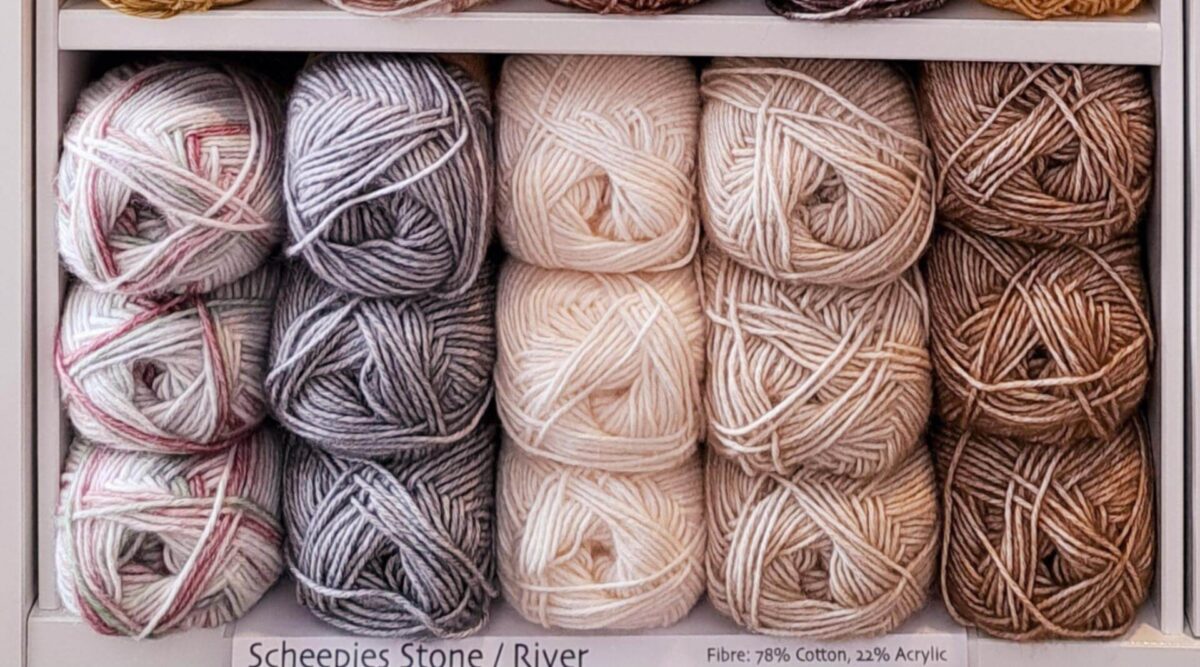
In these cases, I think it’s nicer to opt for a blend, like Scheepjes Stone Washed or River Washed which are a mix of 78% cotton and 22% acrylic. ‘Cause it has that generous amount of cotton, the knitted fabric is SO much more breathable and it’s nice and soft, too – winner!
I think cotton yarn is probably the most popular plant-based yarn, especially for vegan crochet projects.
It’s breathable, natural and brilliant for summer garments, baby knits, homewares, accessories, and all the super cute amigurumi toys. Cotton has excellent stitch definition and feels super smooth to touch, too, so something like, Sheepjes Organicon – which is a lovely organic cotton – is a good vegan yarn choice for crafters with sensitive skin.
It doesn’t, however, have very much stretch.
You know when you’ve worn your jeans a handful of times, and they get a bit baggy at the knees? That’s because there’s no springback. Wool behaves like curly hair – you can pull a tendril and it’ll straighten, let it go and ‘boinggggg’, it springs back again. Cotton just stays stretched.
This means cotton is perfect for a baby cardigan, which is small and fairly light, but heavier items, like an adult cardigan is more likely to stretch out and sag. It’s a similar story with straps on cami tops or crocheted bags. Not the end of the world necessarily, but something to keep in mind when choosing yarn for a project.
Other plant-based yarn options include bamboo, linen, hemp, and regenerated fibres like tencel and viscose.
These vegan-friendly yarns are often picked for summer knitting projects and crochet patterns because they’re so lovely and lightweight, and they drape nicely, too. A summer top knit with a cotton/bamboo blend, would feel silky and cool to wear in the warmer months – much nicer than acrylic when the sun’s out.
Like cotton, plant-based fibres don’t have that bounce or memory like wool does, so they’re not the best for those craft projects that rely on elasticity to give it structure.
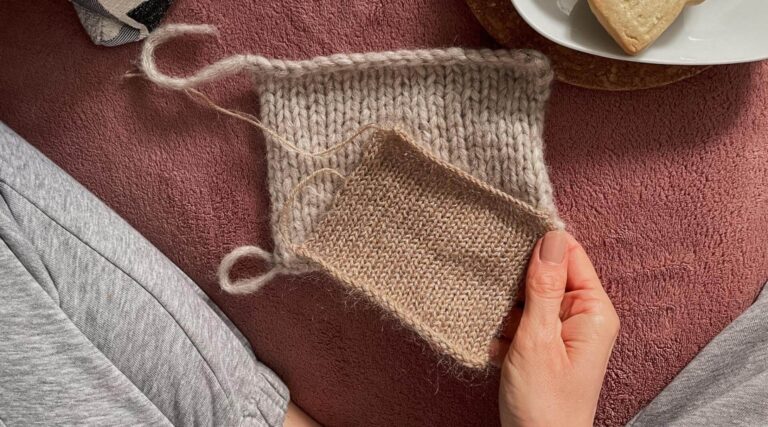
If you’re substituting a wool yarn for a plant-based yarn, definitely stitch up a swatch first. Because the fibres behave in different ways, it’s not always a straightforward swap. A silky bamboo yarn can be lovely for a drapey shawl, less so for a fitted cardigan that would benefit from a bit of elasticity. Doesn’t mean you can’t do it, just means you need to be aware of what your yarn choice means.
I guess the answer to this question really comes down to your personal definition of veganism, and what being a vegan knitter or crocheter means to you. There’s no right or wrong answer here, in my opinion.
Strictly speaking, recycled wool is still wool, and so it isn’t vegan. Just like second-hand leather isn’t vegan. But, there are some vegan knitters and crocheters who are comfortable using recycled wool because it makes use of fibres that are already out there in the world, preventing them from ending up in landfill.
Personally, I think recycled yarns are an option to be considered, but I get that it isn’t for everyone, and that’s okay. You do you!
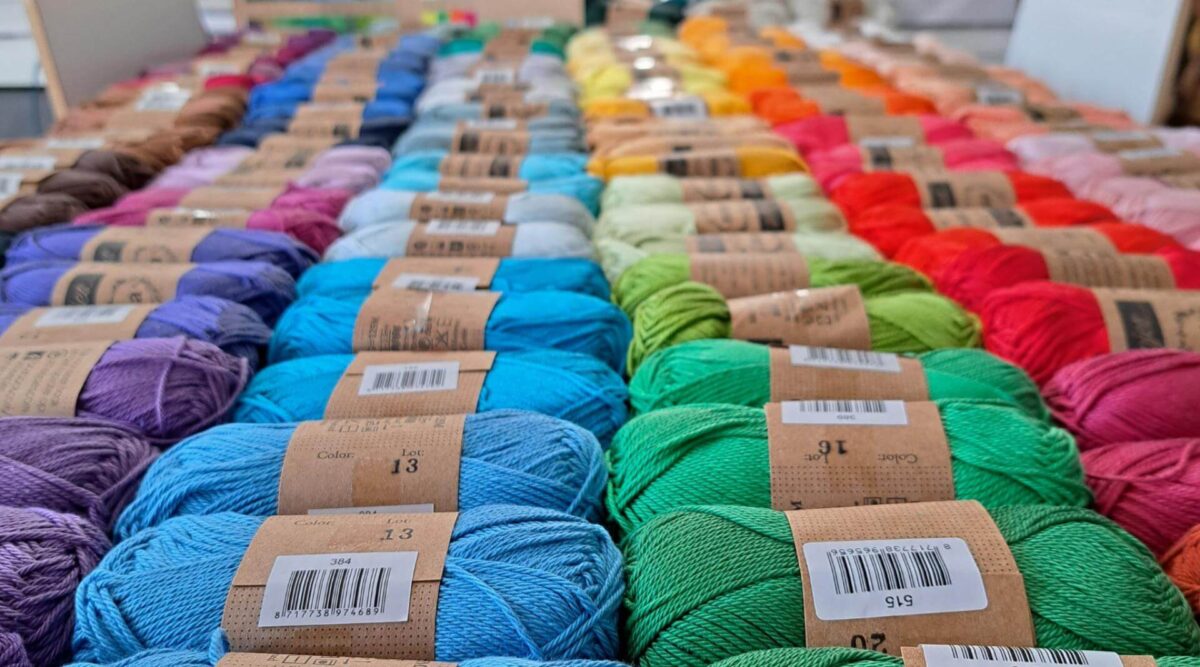
Like with any craft project, when choosing a vegan yarn for knitting or crochet, I think it’s sensible to start with the project and work backwards.
Want to crochet a baby blanket? You’ll probably lean towards an acrylic yarn.
Want to knit a summer top? A plant-based yarn, like a cotton/bamboo mix would probably be a sensible place to start.
Want to whip up some face scrubbies or dishcloths? You might want to look at cotton yarn.
Think about the qualities your craft project needs. The baby blanket needs something different than a summer top. A dishcloth needs something different to a shawl. You want to think about the characteristics of the fabric you want – does it need to be strong? Breathable? Warm? Does it matter if it stretches a bit? Do you need it to drape?
You wouldn’t knit up a dishcloth in acrylic, for instance ‘cause it’ll just push the water around instead of soaking it up. Cotton, on the other hand, is perfect. So, if in doubt, start with a swatch (as you should be) and see how the fabric behaves. Then you’ll be more informed to make the right decision for you.
With a bit of luck, choosing a vegan-friendly yarn for your next knitting or crochet project will feel a little less overwhelming now – but to make it easier still, we’ve got a vegan yarn section on the Baa! website.
Whatever your preference when it comes to yarns and fibres, there are plenty of great options for vegan knitters and crocheters out there. My advice is to think about what you are making and how you want it to feel and wear, and you’ll be on the right track.
Hope that helps!
To provide the best experience we use cookies to store and/or access information. Consenting will allow us to process data on this site. Not consenting may adversely affect certain features and functions.